
Shop

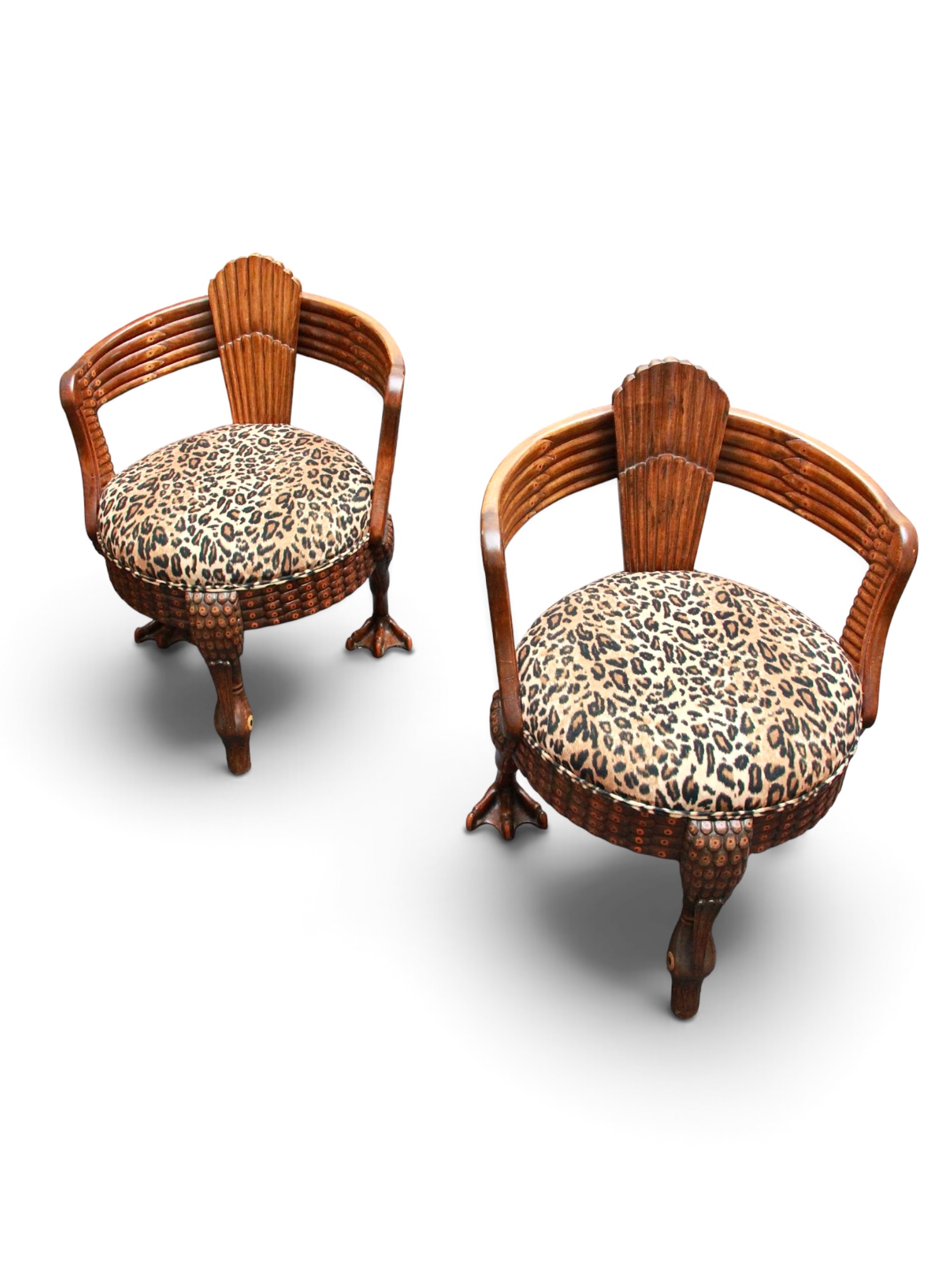


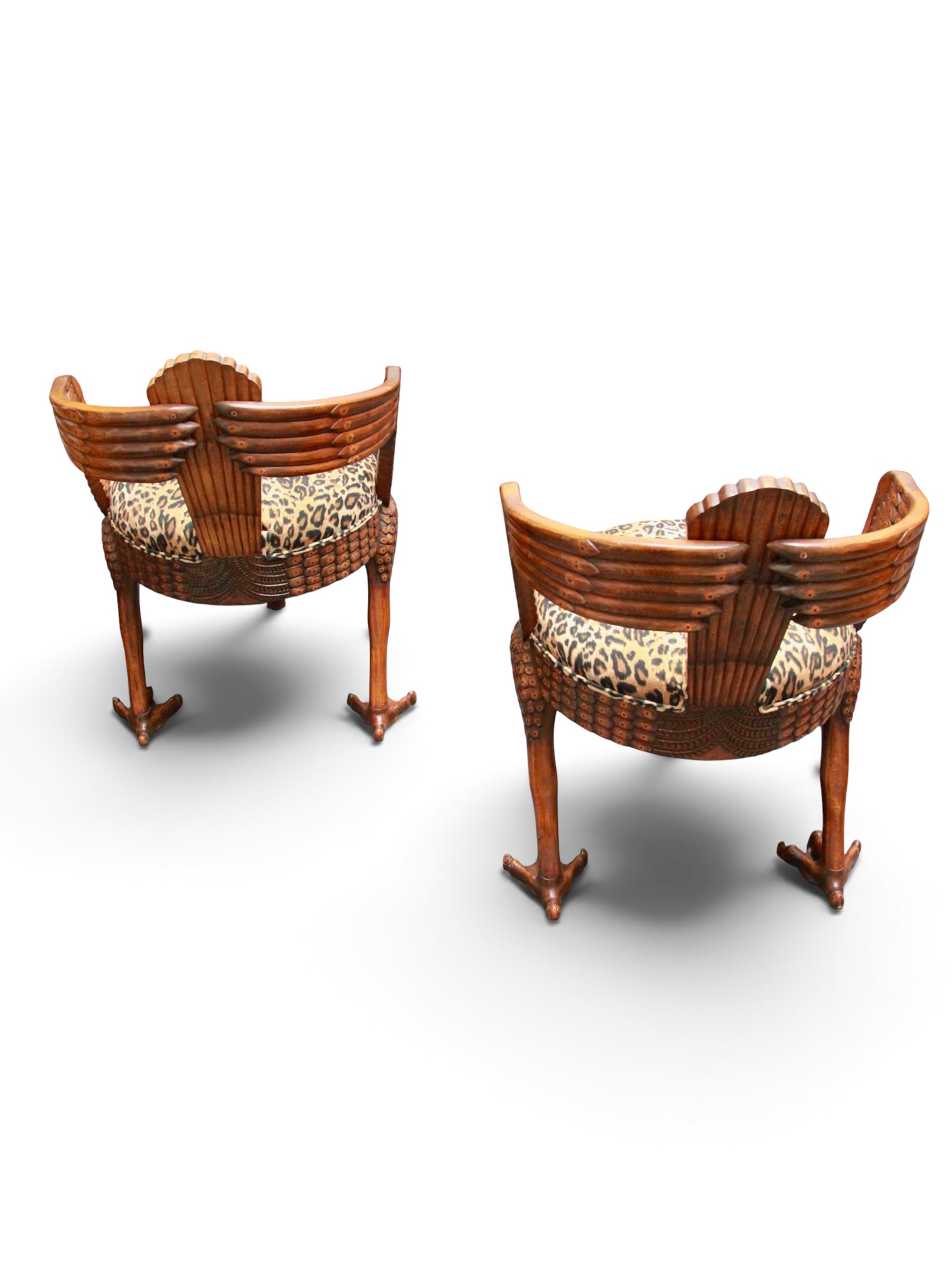

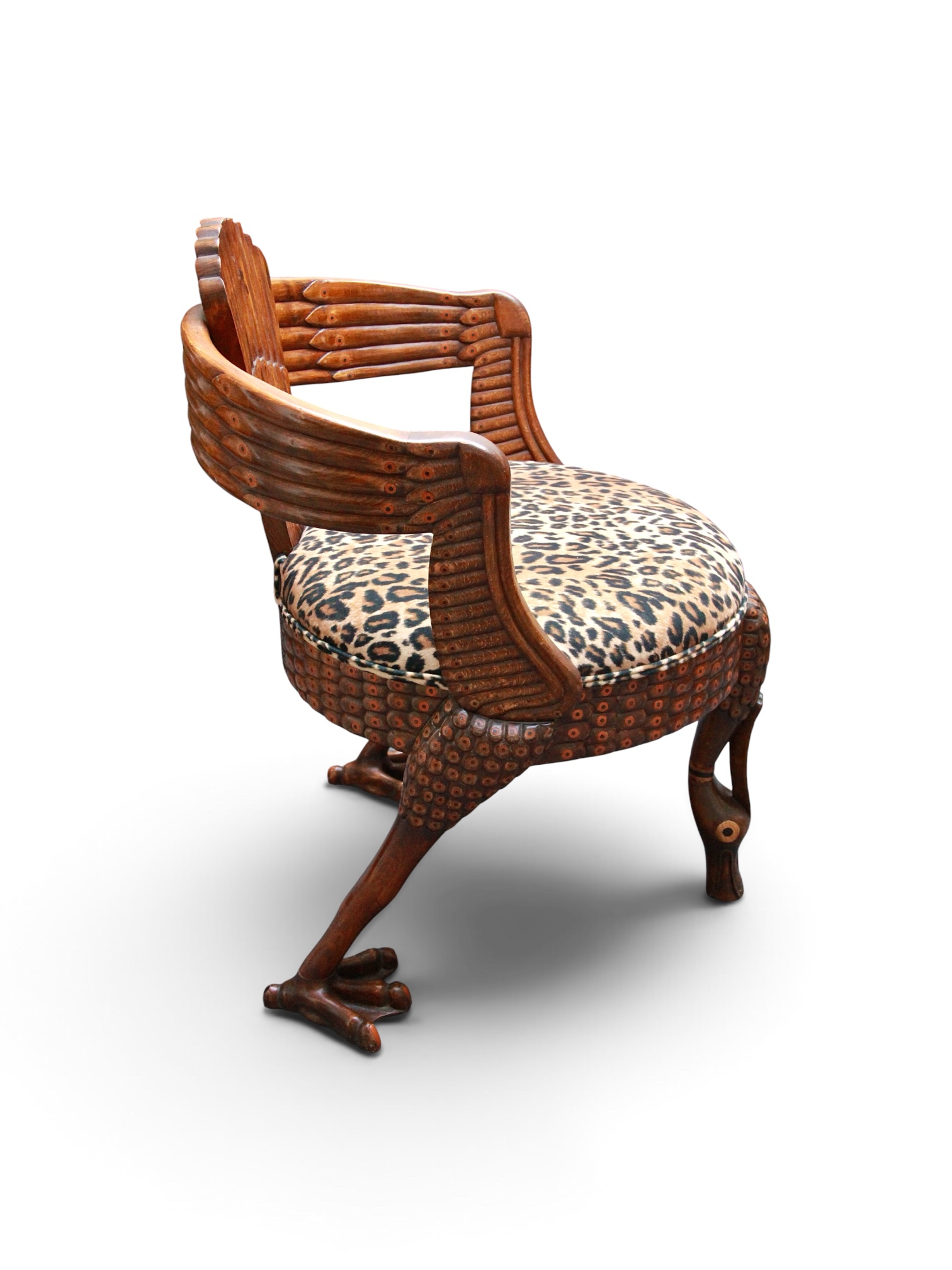
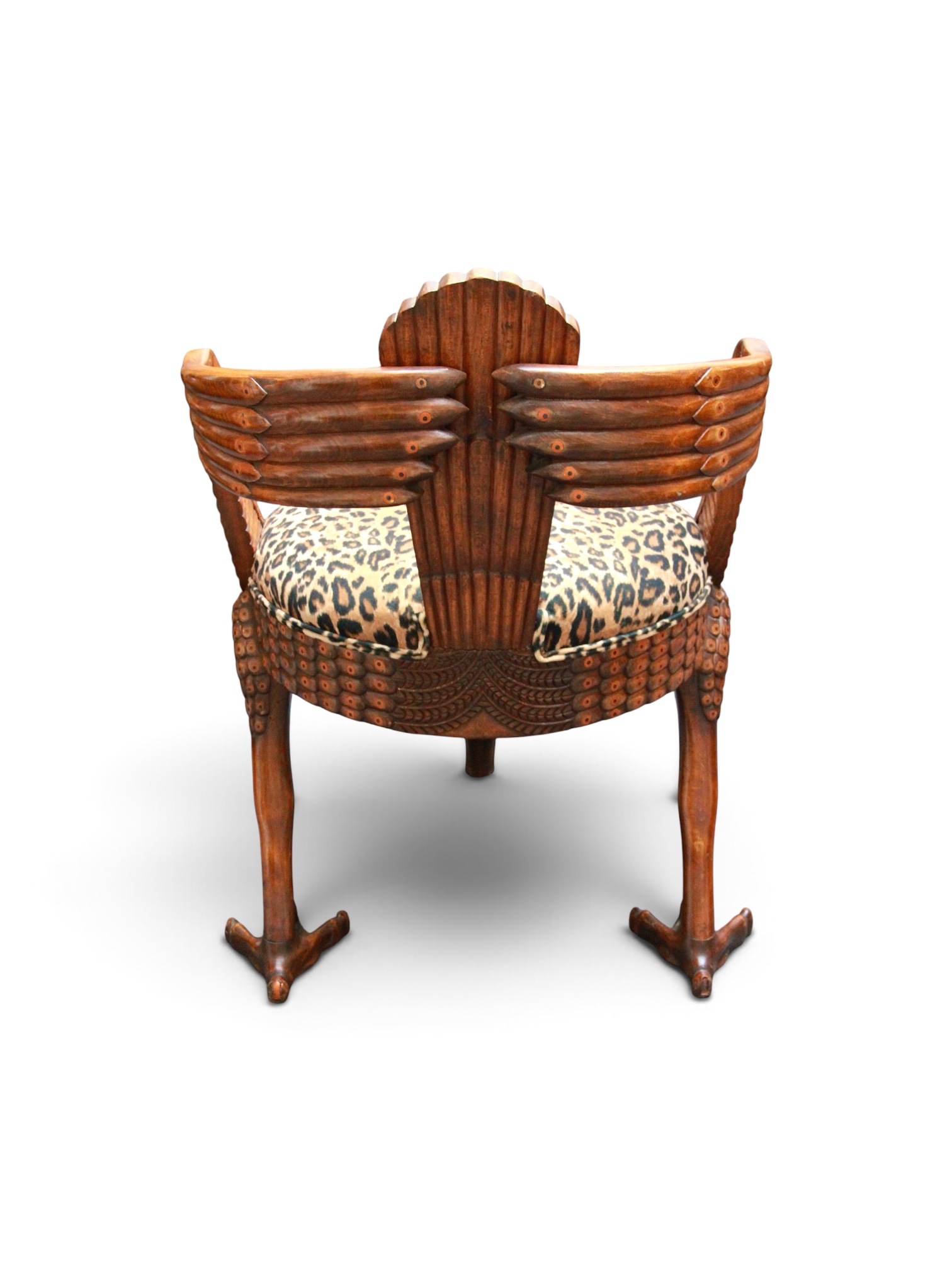

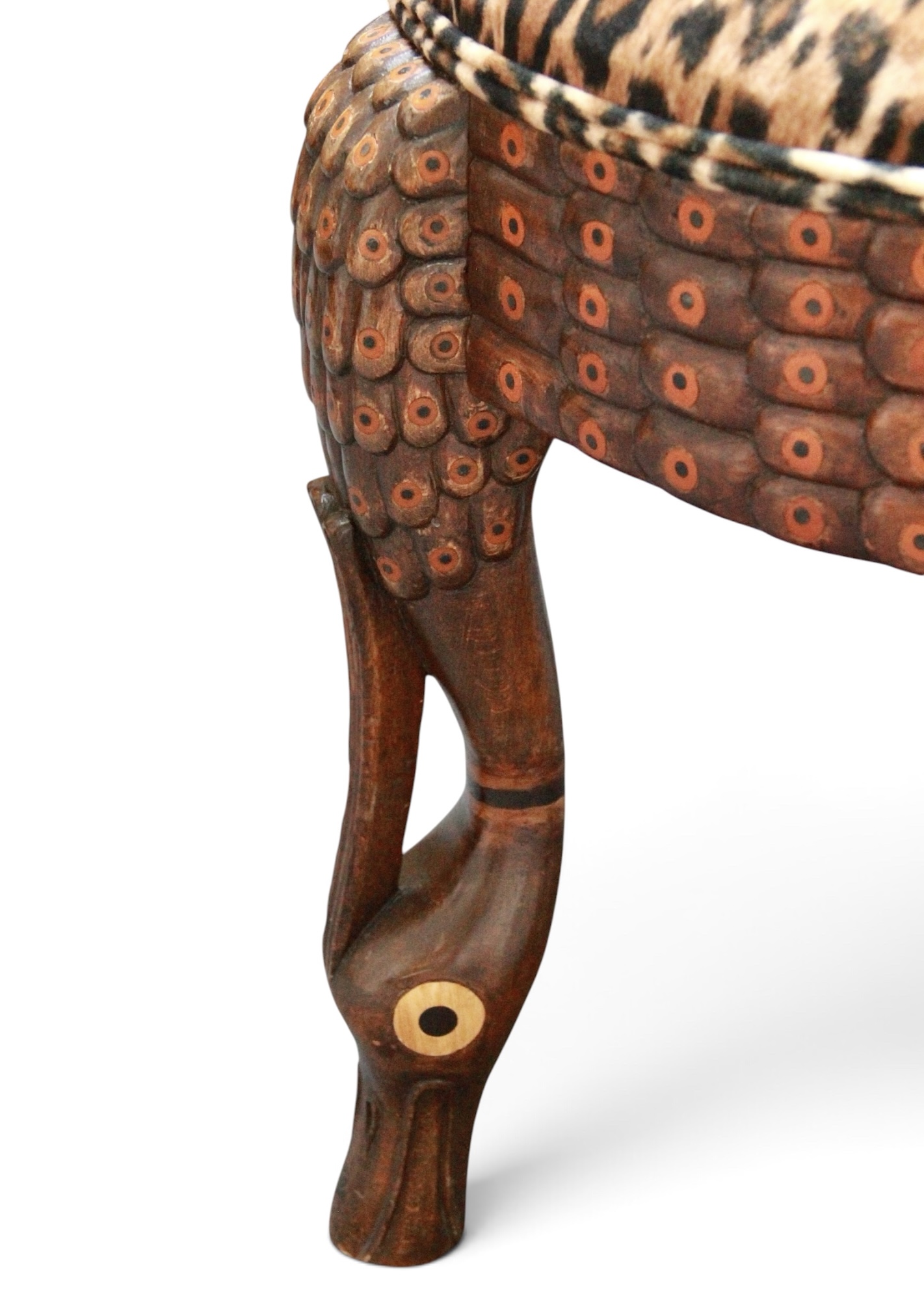


A Rare Pair Of Neo-Egyptian Peacock Armchairs, Cairo, Circa 1880–1885, Giuseppe Parvis (1831–1909)
A remarkable pair of neo-Egyptian carved, polychrome decorated and inlaid hardwood peacock armchairs, attributed to Giuseppe Parvis (1831–1909), Cairo, circa 1880–1885.
Each chair is conceived as a highly stylised peacock, the anatomy and plumage of the bird ingeniously transformed into the structural elements of the furniture.
The rounded upholstered seat is enclosed by great sweeping wings which form the arms and back, boldly carved with successive rows of elongated feathers. At the centre rises a prominent fan-shaped element carved with deeply channelled plumage, evoking the magnificent tail of the peacock.
The circular seat rail and upper sections of the supports are densely carved with overlapping feathers, each individually picked out with painted ocelli or ‘eye’ markings in reddish-orange and black. These repeated eye-spots, one of the most distinctive characteristics of peacock plumage, reinforce the identification of the bird and create an exceptionally rich decorative surface.
The avian conception continues into the supports. Long, elegantly modelled bird legs terminate in boldly carved splayed feet, while other supports are extraordinarily fashioned as elongated bird heads and necks, complete with contrasting circular inlaid eyes.
Viewed from behind, the design becomes particularly apparent: the wings sweep symmetrically around the chair and meet the great central tail-like element, while further carved plumage decorates the rear seat rail. The bird is therefore not simply an applied decorative motif; its wings, feathers, body, legs and tail determine the architecture of the chair itself.
The seats are presently upholstered in leopard-pattern textile.
The chairs belong to the extraordinarily inventive tradition of neo-Egyptian furniture associated with the Cairo workshops of Giuseppe Parvis, the Italian-born cabinetmaker and designer whose work combined European furniture forms with ancient Egyptian and Islamic sources for an international clientele.
Parvis was particularly imaginative in his use of zoomorphic forms. Rather than merely decorating conventional furniture with Egyptian motifs, he frequently allowed animals and birds to become structural components of the furniture itself.
This approach is documented in a neo-Egyptian zoomorphic pouf by Giuseppe Parvis dated 1884, now preserved in the Museo Stibbert, Florence. The Stibbert piece provides an important contemporary comparison for the present chairs and demonstrates Parvis’s production of highly sculptural animal-form furniture during the mid-1880s.
The present pair are exceptional examples of this playful and highly sophisticated strand of nineteenth-century Egyptian Revival design, in which sculpture, furniture and fantasy are combined to extraordinary effect.
Cairo, circa 1880–1885.
Attributed to Giuseppe Parvis (1831–1909).
Carved hardwood, polychrome decorated and with contrasting inlaid detail, upholstered seats.
Literature
Manfredi Lapi Gatteschi (ed.), Giuseppe Parvis: Ebanista e designer tra Egitto ed Europa nel secondo Ottocento, including the documented Giuseppe Parvis neo-Egyptian zoomorphic pouf dated 1884, Tav. 76, Museo Stibbert, Florence.
H 79 x W 64 x D 60
£12,000.00