
Shop
A Rare Neo-Egyptian Ibis Stool, Cairo, Circa 1884 – Giuseppe Parvis
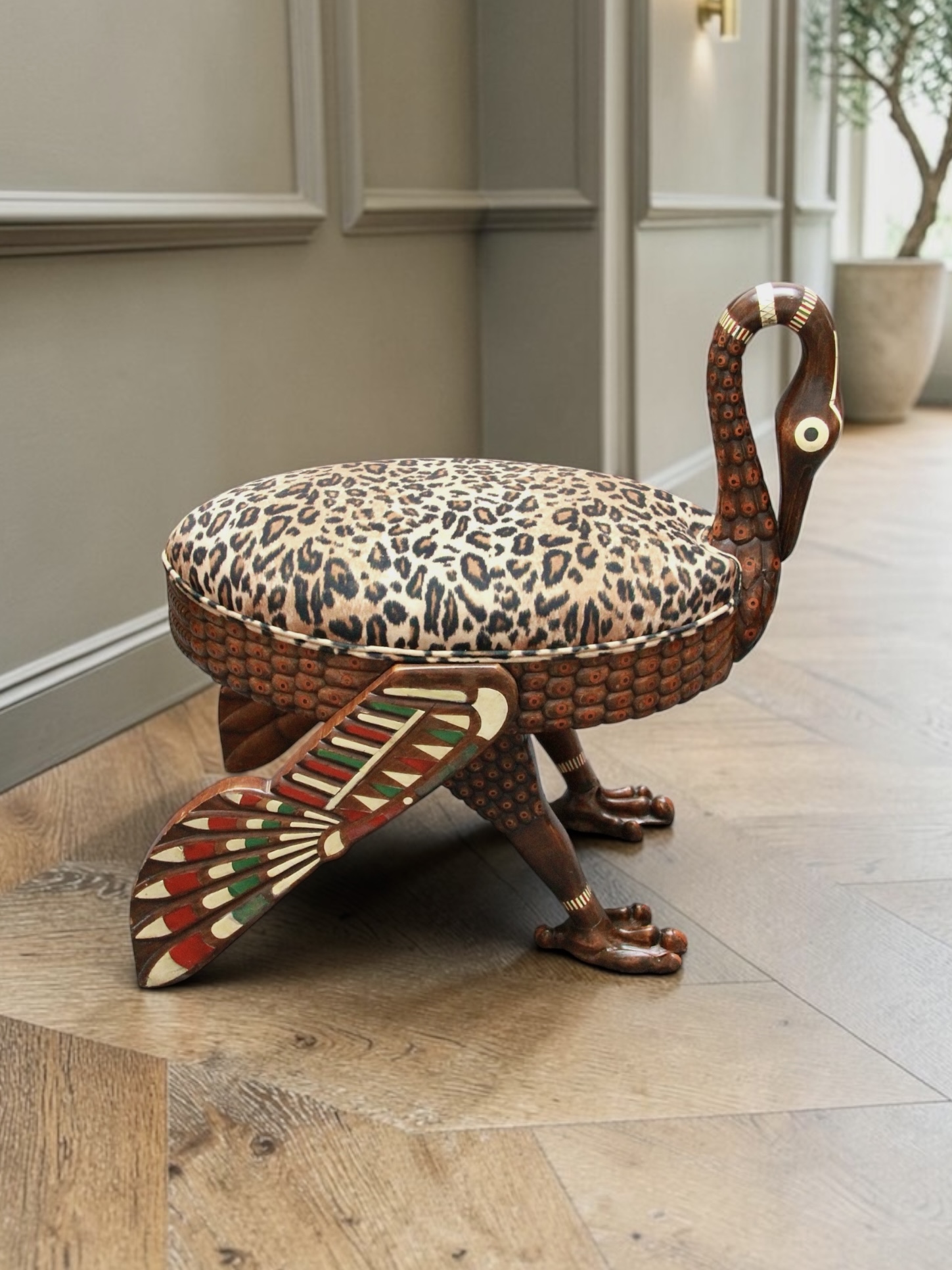
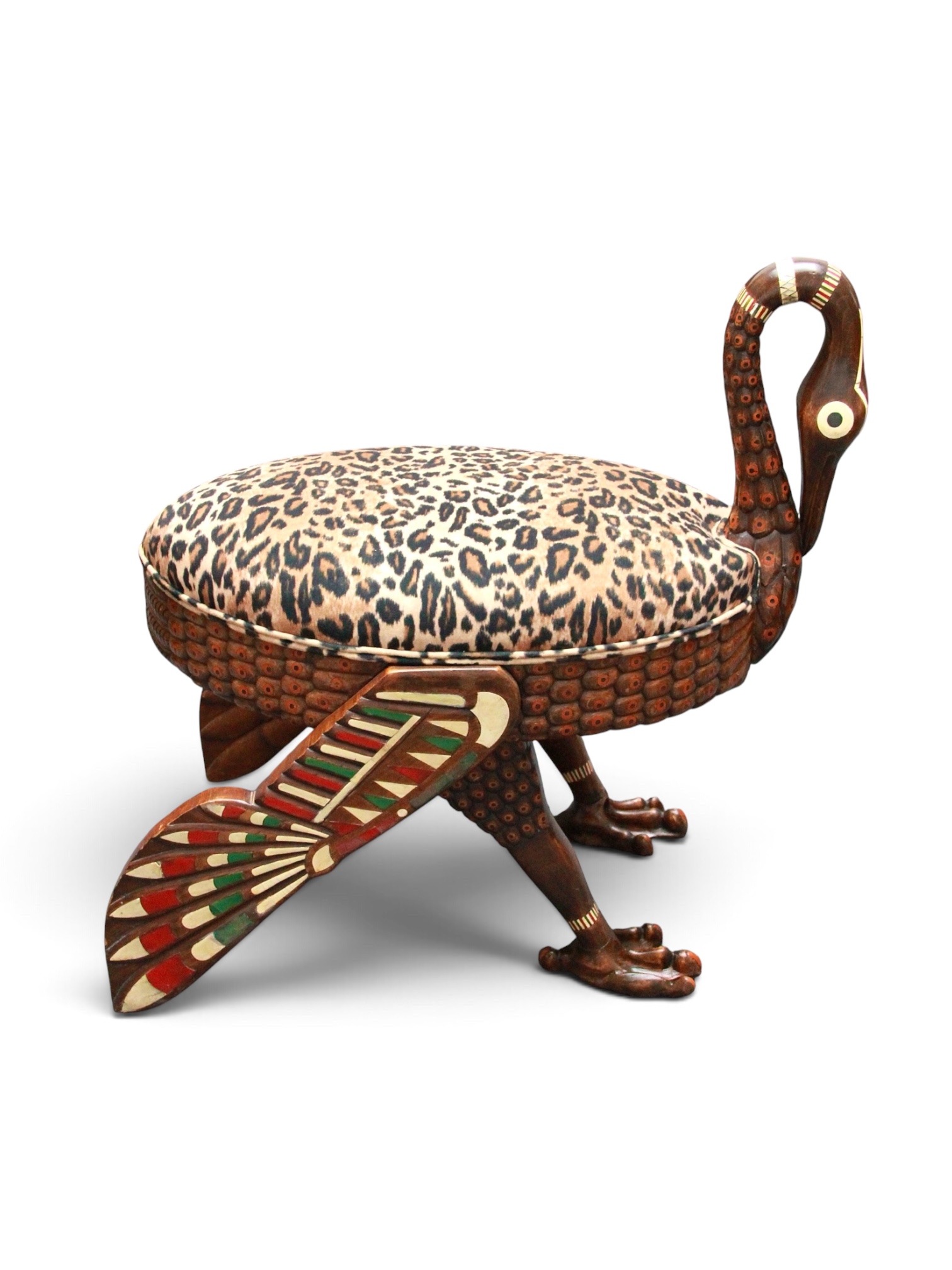
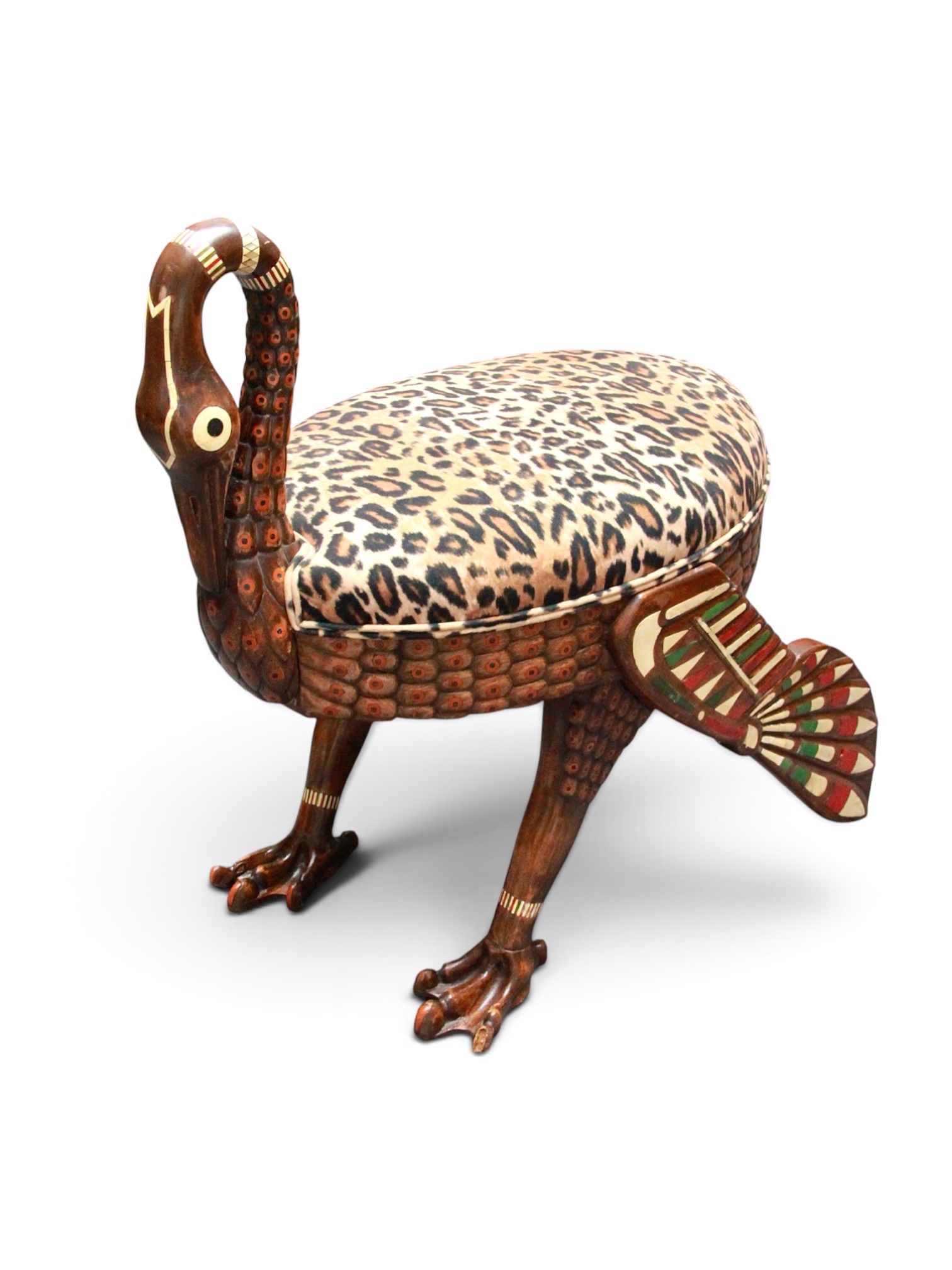
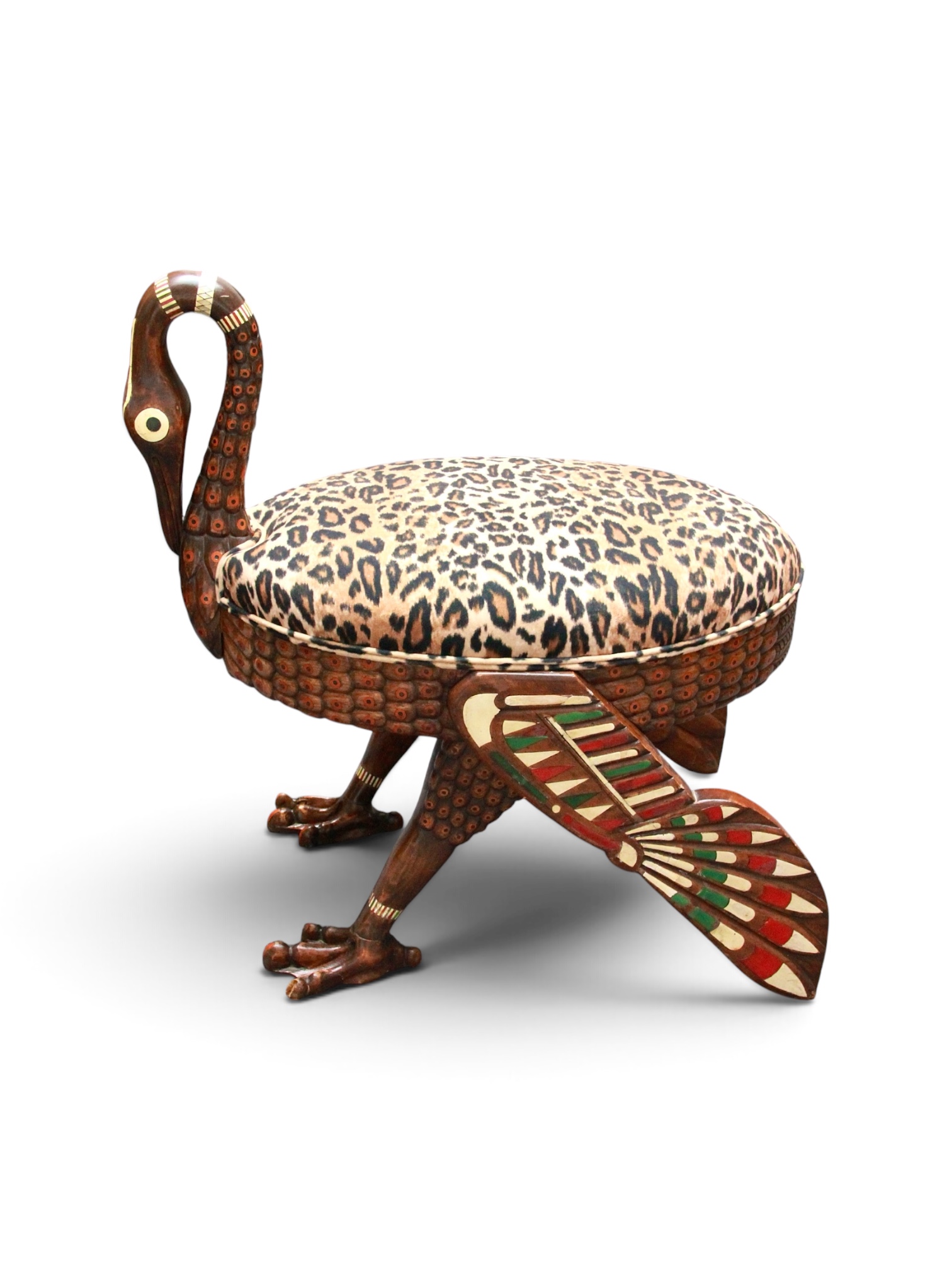
A remarkable Egyptian Revival carved, polychrome decorated and inlaid ibis stool, attributed to Giuseppe Parvis (1831–1909), Cairo, circa 1884.
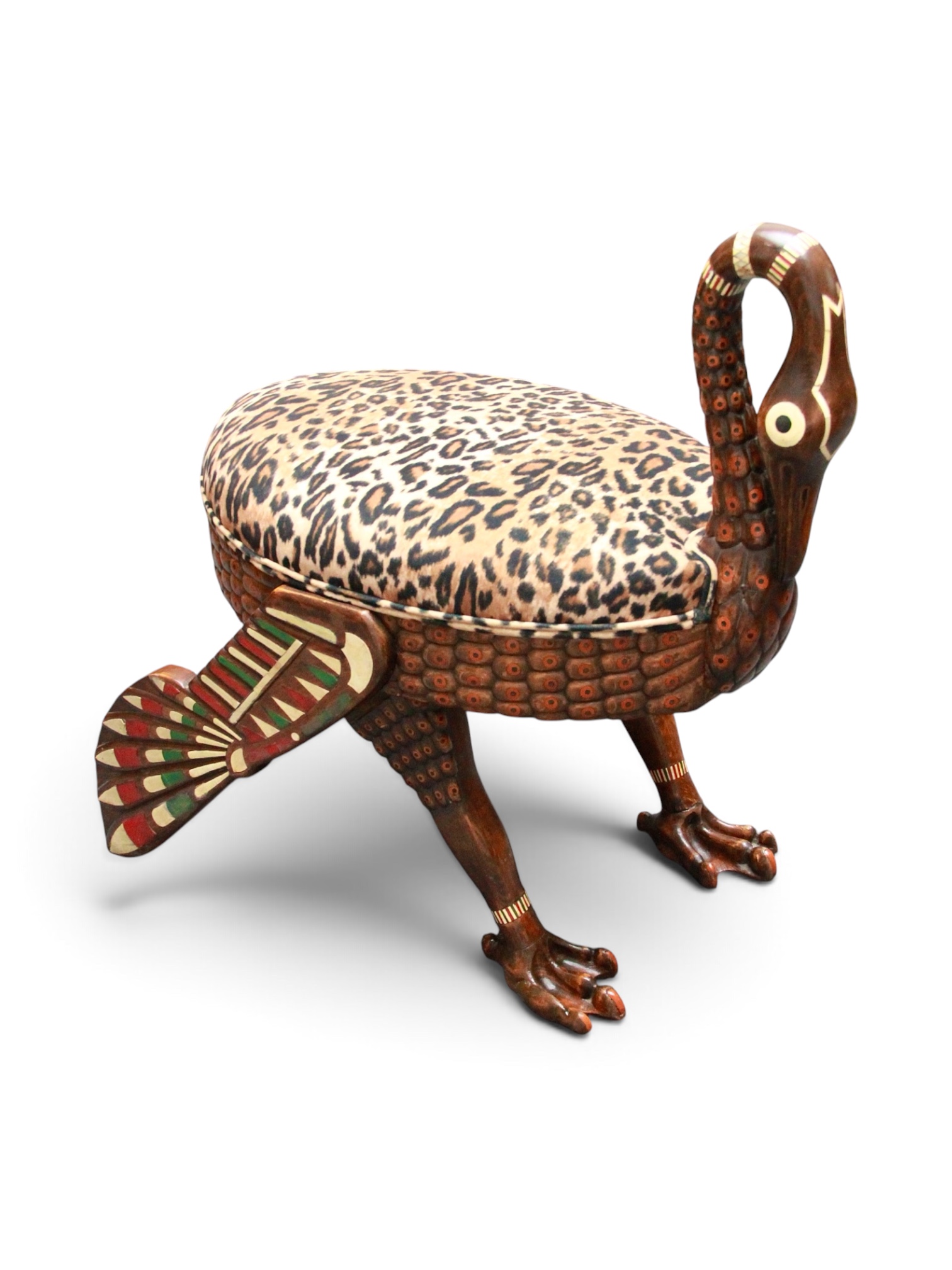
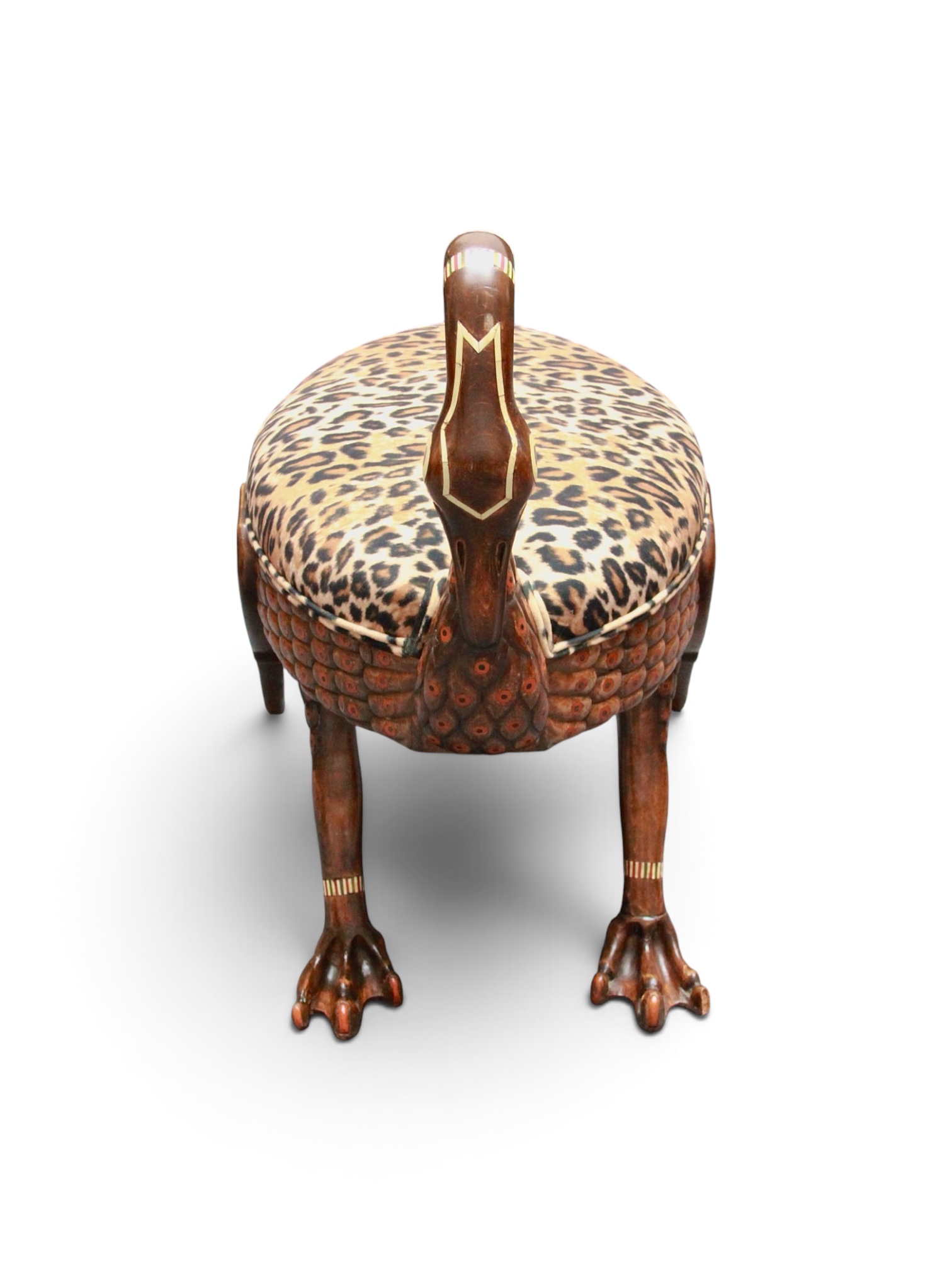
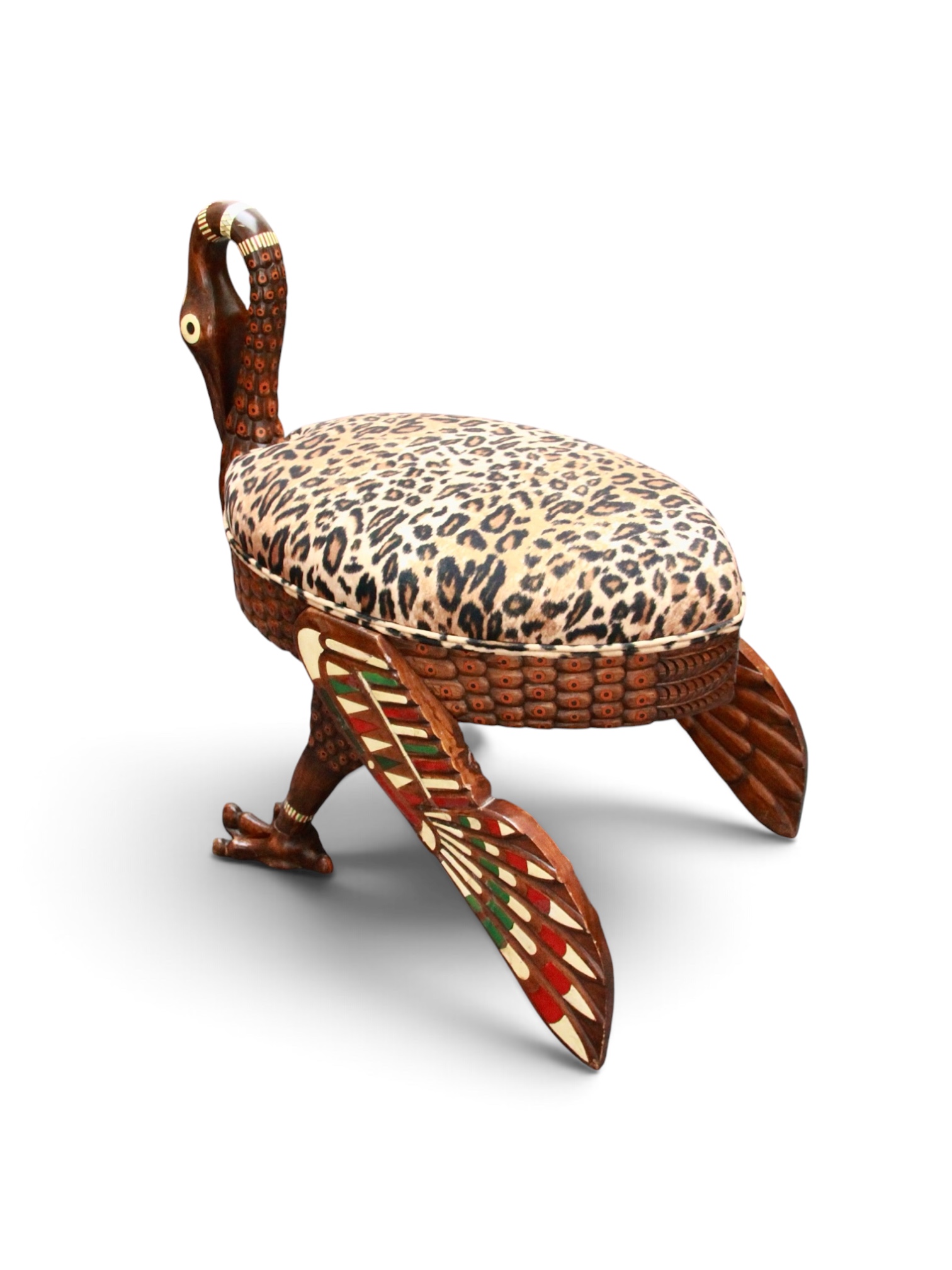
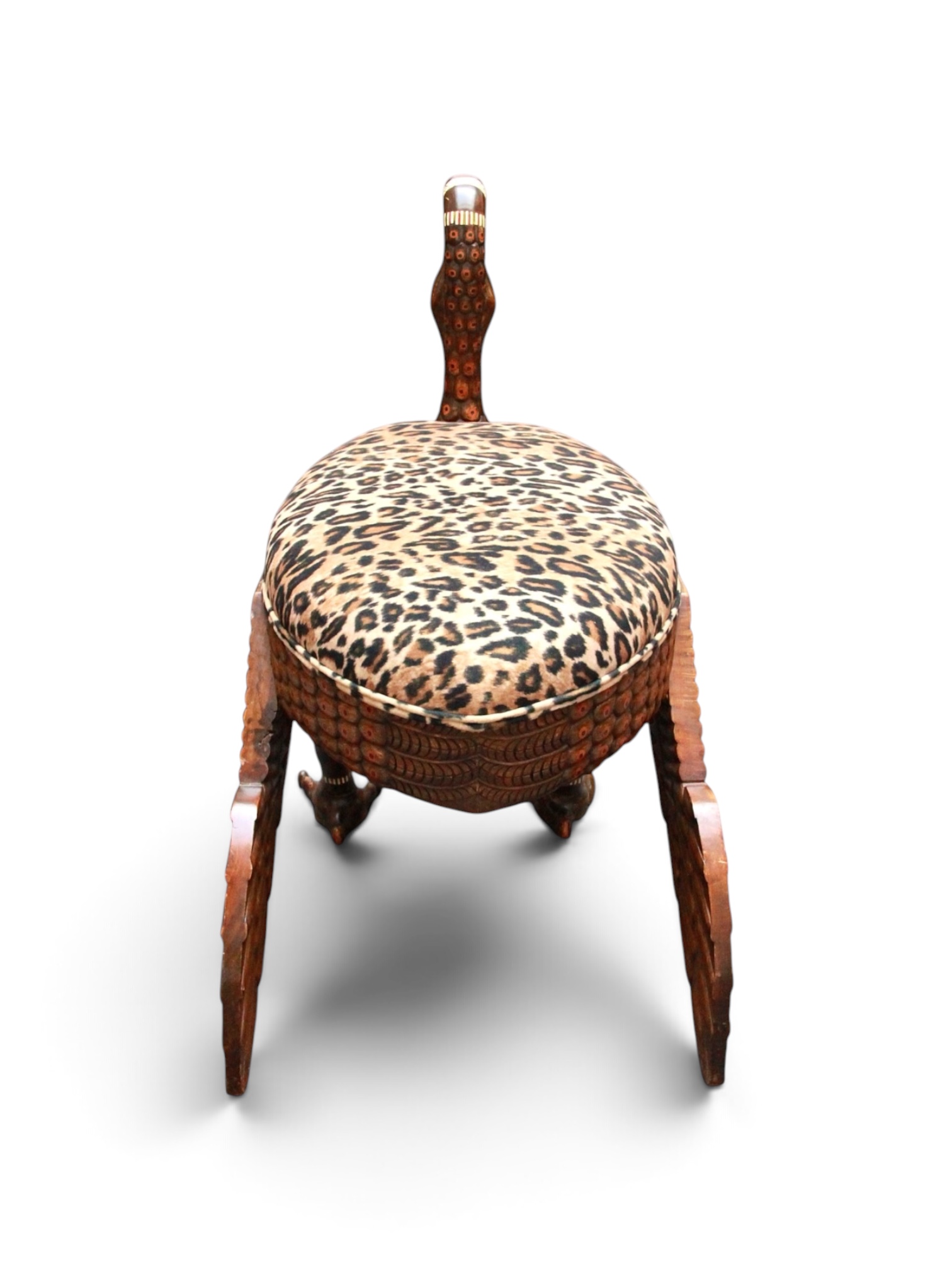
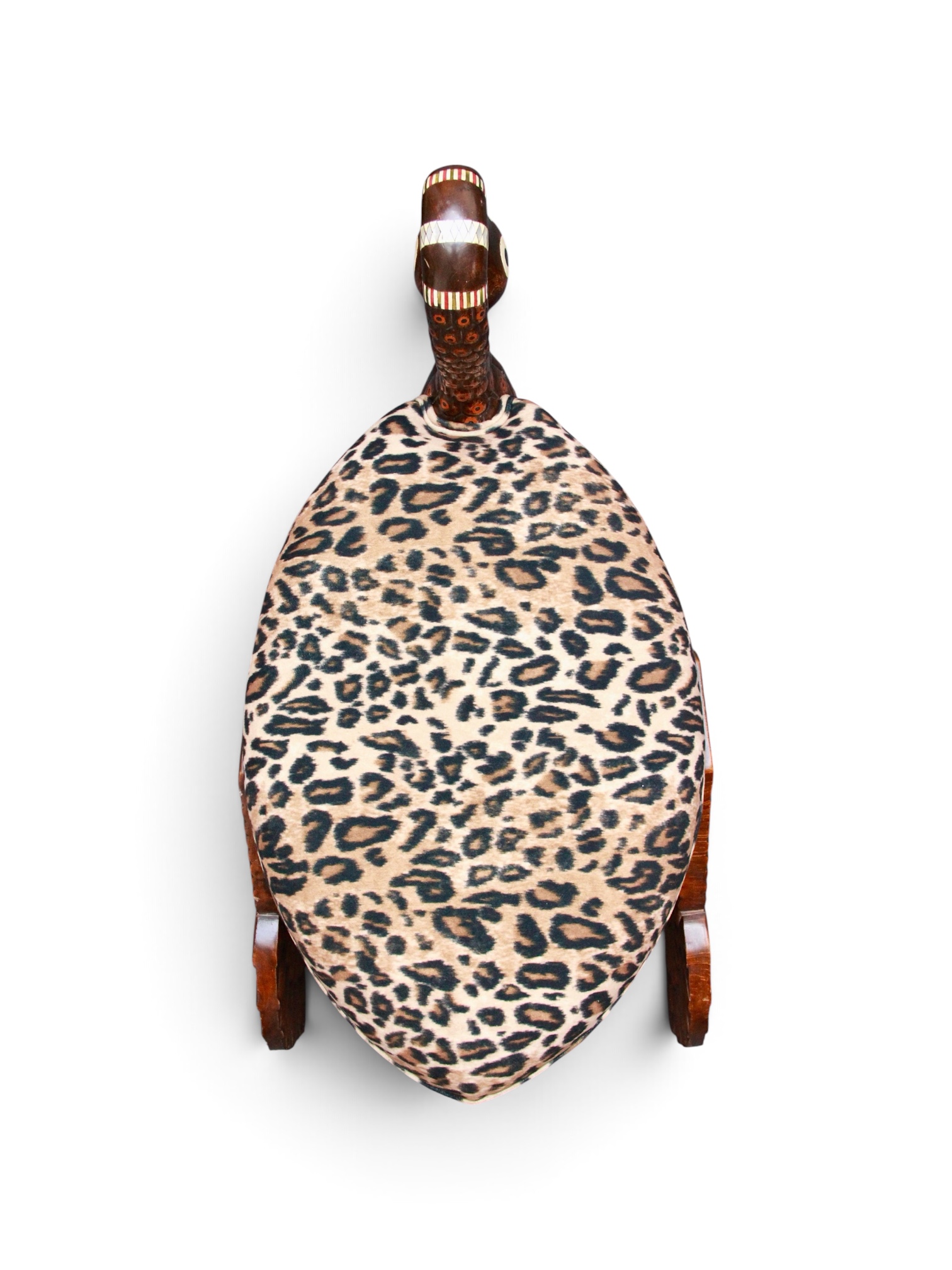
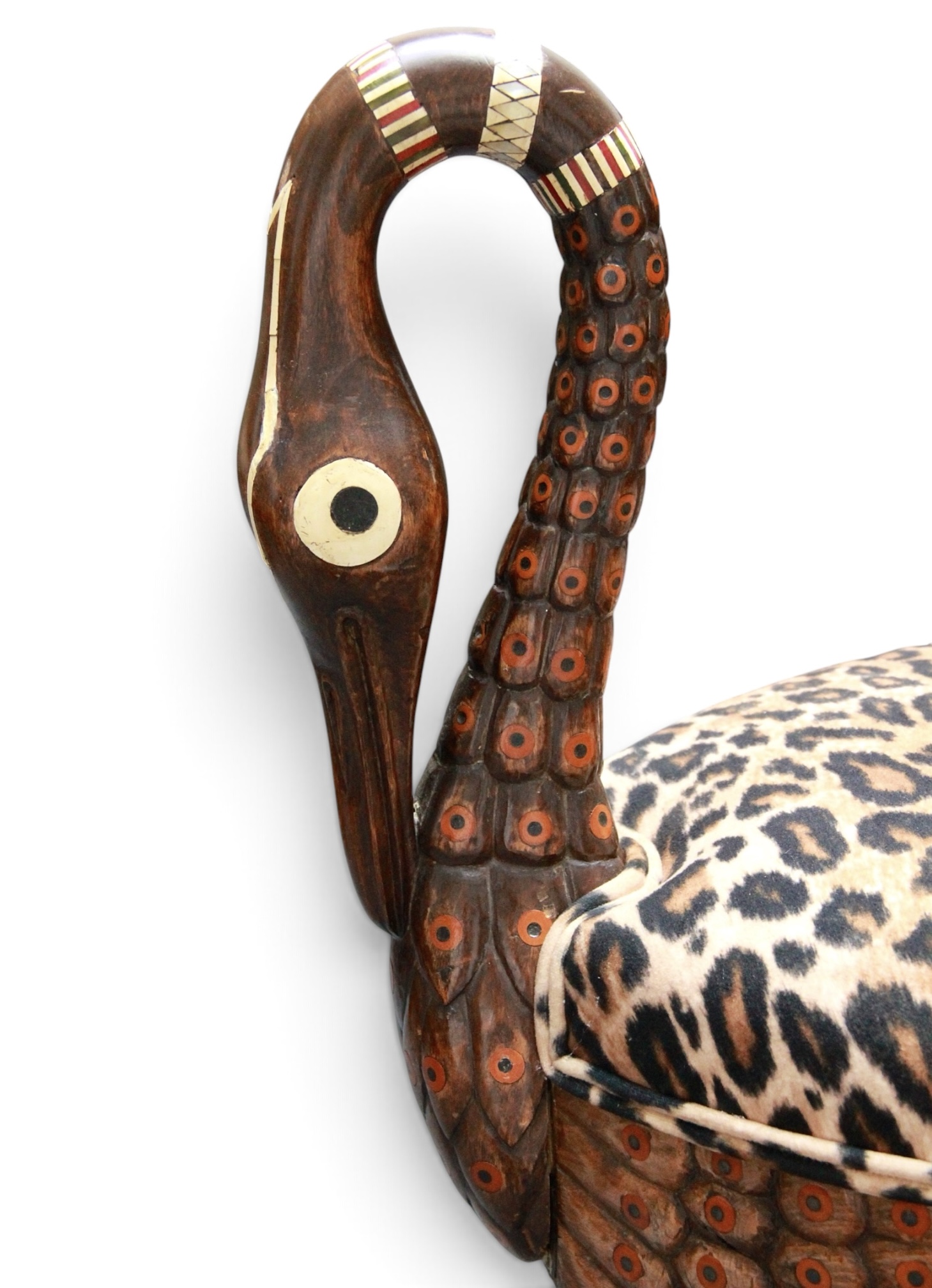
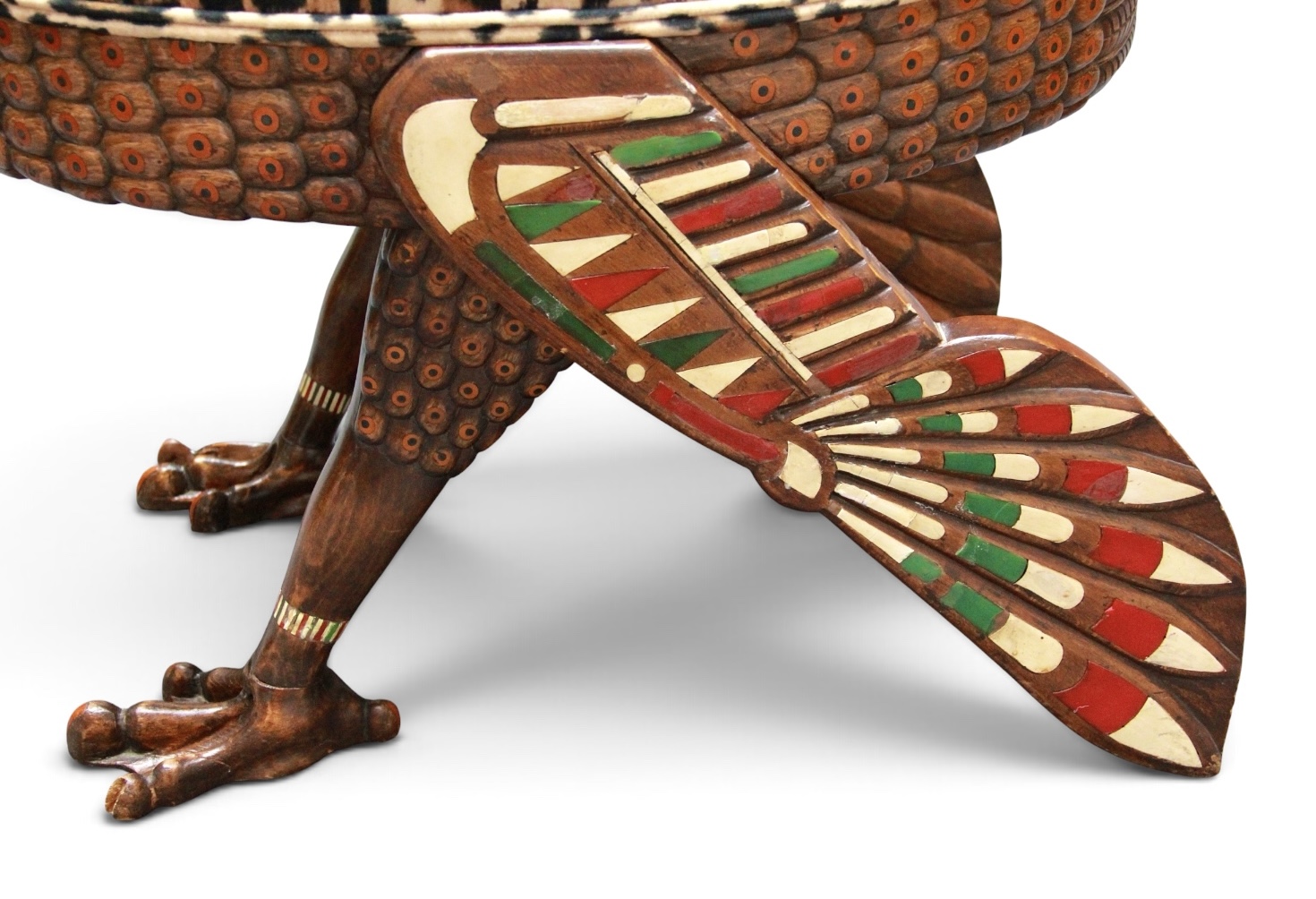
Carved as a highly stylised sacred ibis, the upholstered oval body supported upon four powerful bird-like legs terminating in individually carved talons. The long, elegantly curved neck rises dramatically from the rear of the seat, terminating in the characteristic elongated ibis head with a large inlaid eye.
The carved hardwood body retains a warm reddish-brown finish and is extensively ornamented in the neo-Egyptian manner. The plumage is represented by repeated carved and painted feather motifs, while the head and neck are enriched with bands of polychrome decoration.
Particularly striking are the large outstretched wings forming the sides of the stool. These are carved with stylised feathers and richly decorated in red, green, cream and black, producing the strong graphic effect characteristic of late nineteenth-century Egyptian Revival design.
The oval upholstered seat is presently covered in leopard-pattern fabric.
The extraordinary zoomorphic construction relates closely to the furniture of Giuseppe Parvis, the Italian-born cabinetmaker who established his celebrated workshops in Cairo and became one of the foremost designers of Egyptian and Orientalist furniture during the later nineteenth century.
Of particular significance is a closely related neo-Egyptian animal pouf by Giuseppe Parvis dated 1884, preserved in the Museo Stibbert, Florence and published in Giuseppe Parvis: Ebanista e designer tra Egitto ed Europa nel secondo Ottocento, Tav. 76. Like the present stool, the Stibbert example combines an upholstered seat with an extraordinary sculptural animal support, demonstrating Parvis’s production of zoomorphic neo-Egyptian furniture at precisely this period.
The ibis held particular significance in ancient Egyptian religion, being sacred to Thoth, god of wisdom, writing and knowledge. Its transformation here into a piece of furniture perfectly encapsulates the archaeological imagination and theatricality of the Egyptian Revival in the 1880s.
Cairo, circa 1884.
Attributed to Giuseppe Parvis.
Carved hardwood, polychrome decorated and inlaid, with upholstered seat.
Literature
Manfredi Lapi Gatteschi (ed.), Giuseppe Parvis: Ebanista e designer tra Egitto ed Europa nel secondo Ottocento, Tav. 76, illustrating a Giuseppe Parvis neo-Egyptian zoomorphic pouf dated 1884, Museo Stibbert, Florence.
H 66 x W 40 x D 64
£12,000.00