
Shop
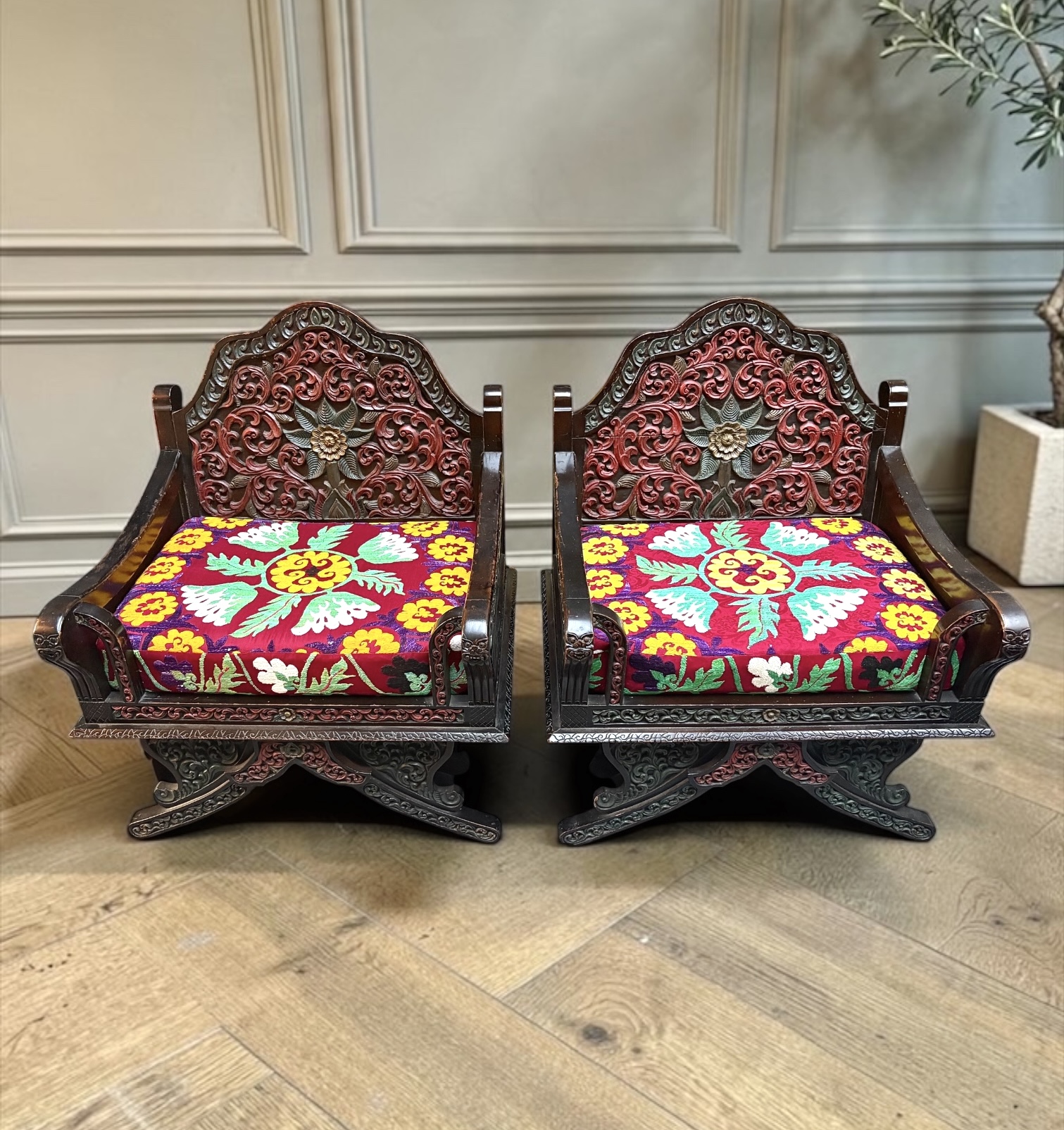


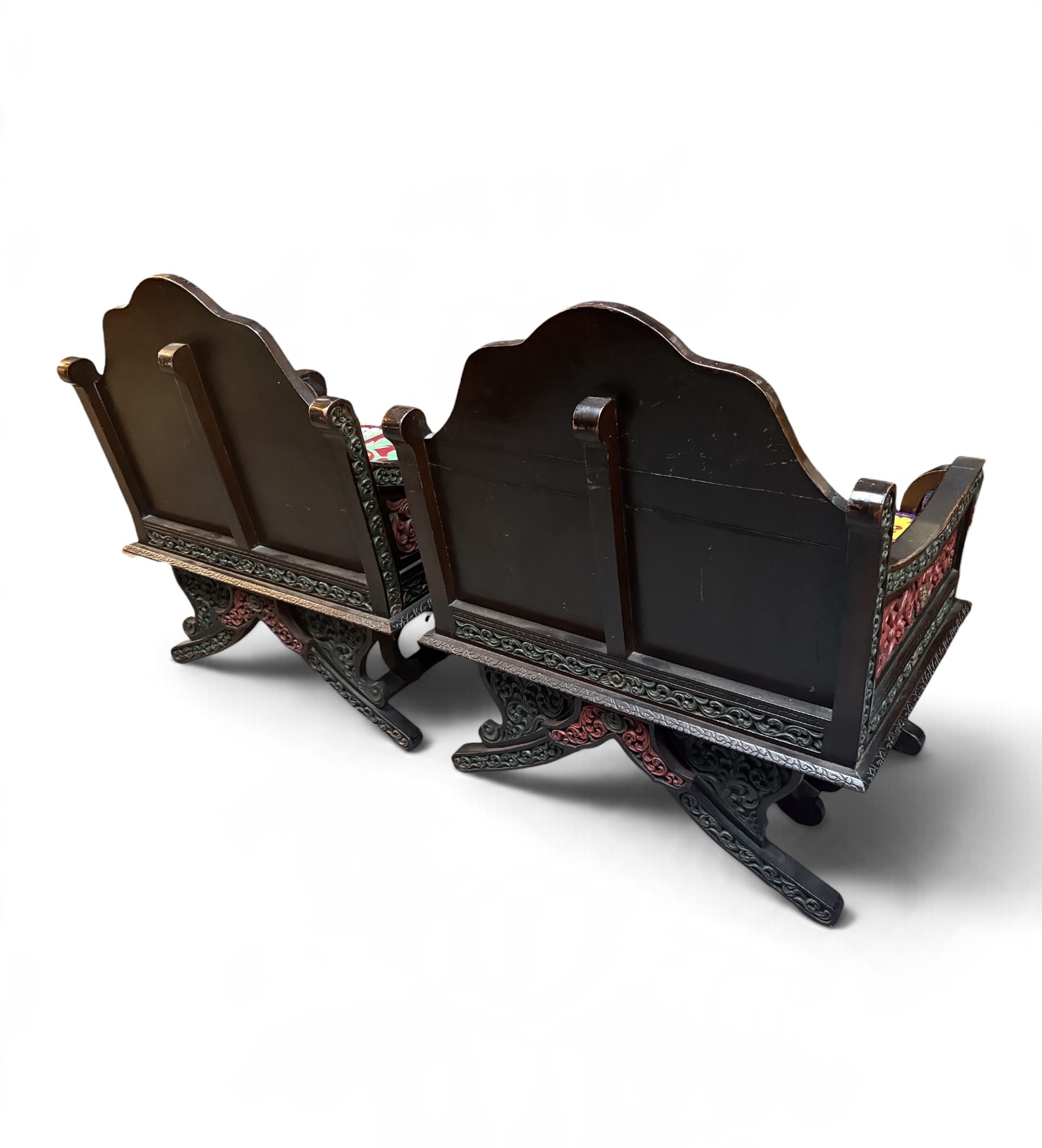

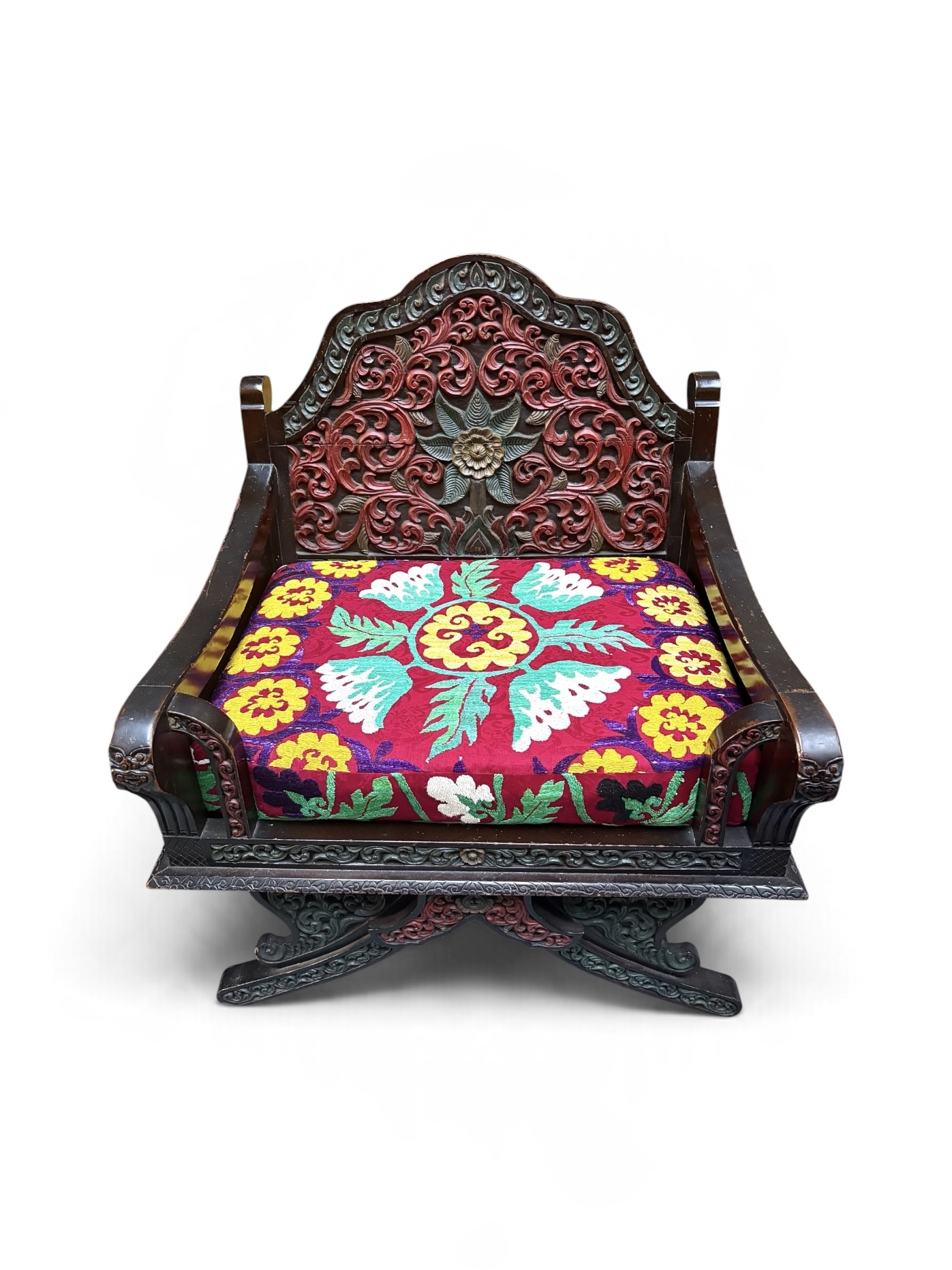
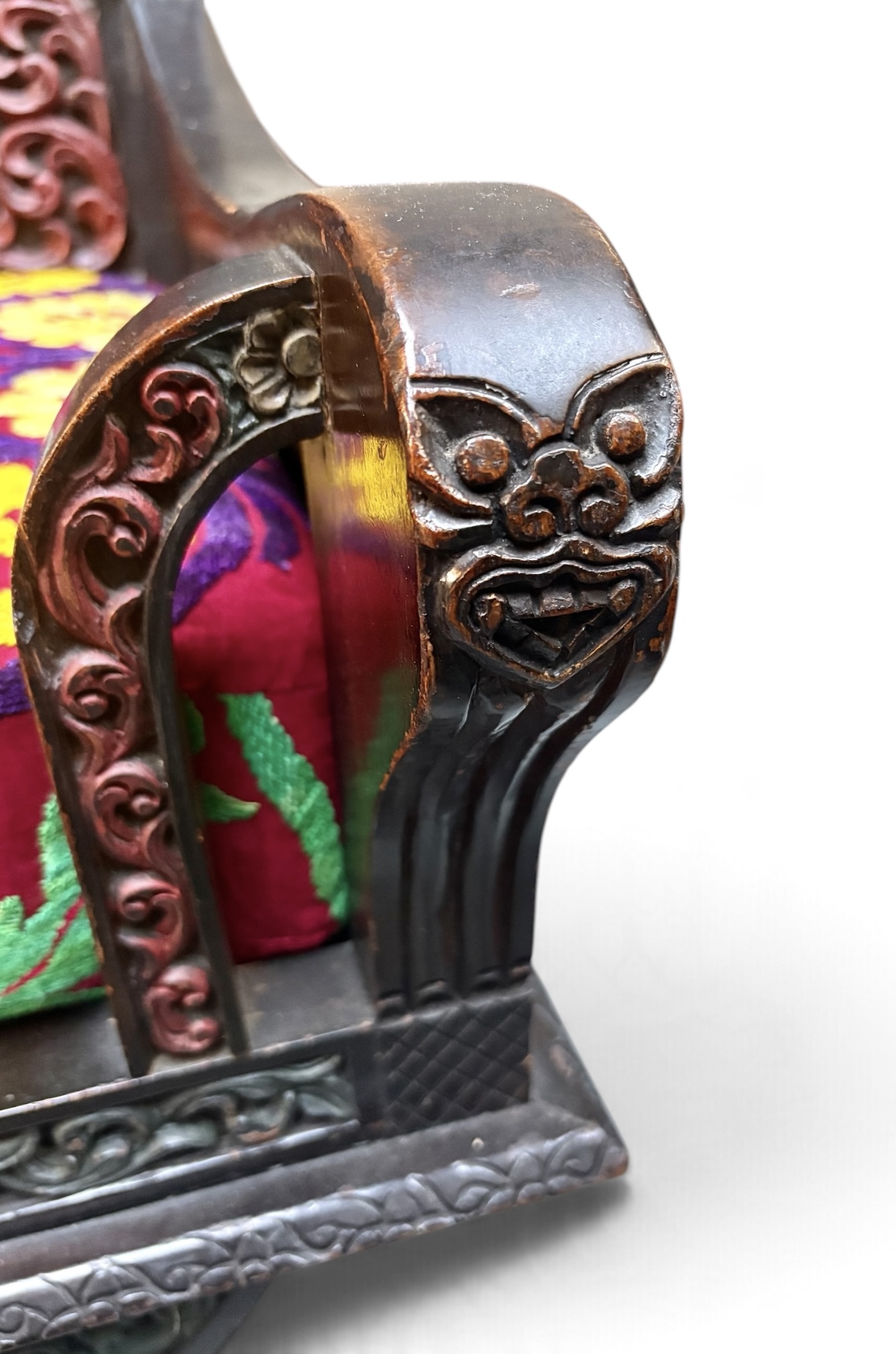
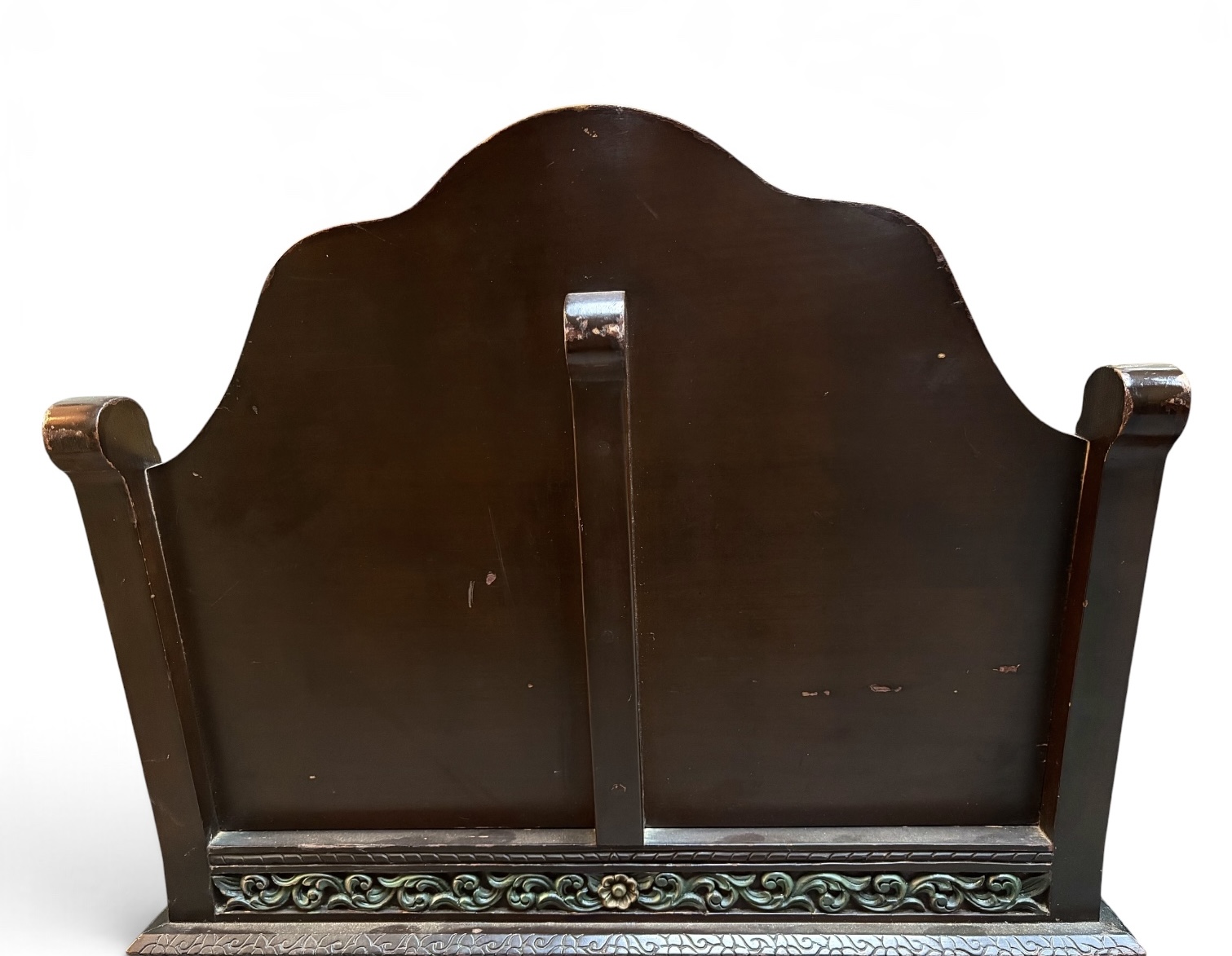
A Pair of Carved and Polychrome Hardwood Throne Chairs
Java, Indonesia, circa 1900
A pair of Indonesian hardwood throne chairs, each with a shaped, arched backrest carved in relief with scrolling foliage and stylised floral motifs centred by a flowerhead, with polychrome decoration in shades of red, green and gold.
The broad, sweeping arms terminate in carved scrolls, above shaped side panels decorated with further foliate carving. Each chair is raised on an X-form base with carved scrolling supports, united by a horizontal stretcher.
The design combines European-influenced furniture forms with traditional Javanese carving, reflecting the mixture of decorative styles found in Indonesian furniture during the Dutch colonial period.
The chairs retain their decorative painted finish and are fitted with upholstered seat cushions covered in brightly coloured floral textiles.
Dimensions: Each 86 cm high × 76 cm wide × 66 cm deep.
Provenance:
Elveden Hall
Removed from his kingdom by the British East India Company, Duleep Singh (1838-1893), the last Maharajah of the Sikh Empire, was exiled to England as a boy in 1854. He purchased Elveden Hall estate (once the home of Admiral Augustus Keppel) in 1863, and employed the architect John Norton to remodel the property with an Italianate exterior and interiors based on the Mughal palaces that had been his home. He transformed the run-down estate into a game reserve and it was here that Duleep gained his reputation as the fourth best shot in England. The estate became famous for its shooting parties that were a favourite of Queen Victoria.
Despite settling into life in the English countryside at Elveden – rebuilding the village’s school, church and cottages – the maharajah’s heart was still in India, so much so that he left Elveden in 1886 to journey to the Punjab in an attempt to re-establish his dynasty there. Unfortunately, this was a futile attempt and he never returned to England, dying in Paris in 1893.
Elveden Hall, along with its 16,000 acres, was sold to Edward Cecil Guinness (created Earl of Iveagh and Viscount of Elveden in 1919), and it was he who built the Elveden War Memorial – the towering 113-feet high Corinthian column made to commemorate the forty-eight men from the parishes of Elveden, Icklingham and Eriswell who died in the First World War. Today, it makes a popular landmark for holidaymakers on their way to the beaches of Norfolk.
£7,500.00