
Shop

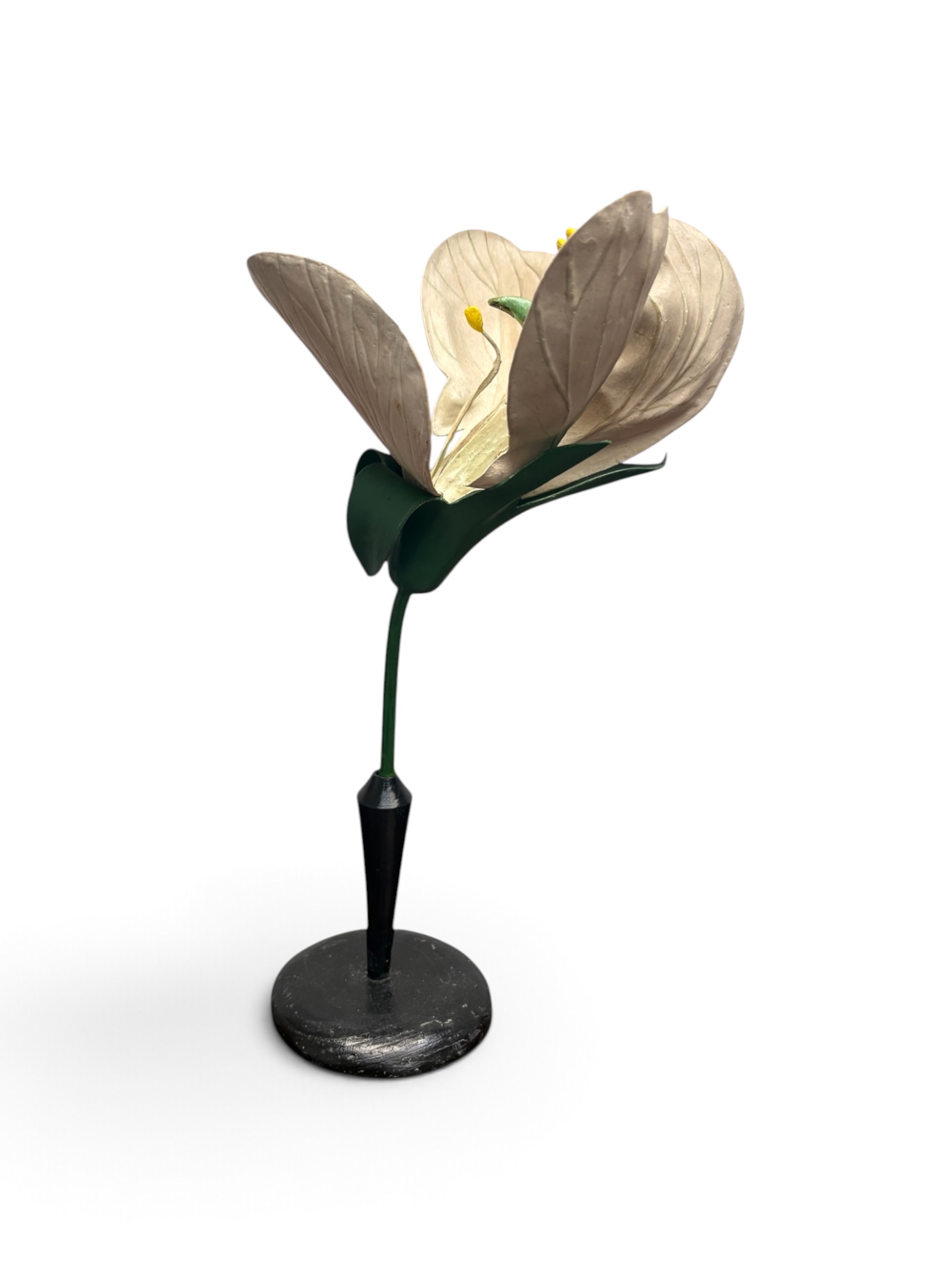


A Large Botanical Teaching Model of a Garden Pea (Pisum sativum), circa 1900 Attributed to Robert or Reinhold Brendel, Germany
An enlarged botanical teaching model of Pisum sativum, commonly known as the garden pea, depicting the flower with its distinctive ivory-white, butterfly-shaped petals, delicately modelled with naturalistic veining.
The flower is partially opened to reveal its internal reproductive structures, including slender stamens with bright yellow anthers and a curved green pistil. The petals rise from a dark green calyx, supported on a slender stem above an ebonised wooden base. Hand-painted papier-mâché
Belonging to the Fabaceae family, the pea flower is distinguished by its specialised arrangement of five petals, comprising a broad upper standard, two lateral wings and a pair of lower petals forming the keel. This structure encloses and protects the reproductive organs, which are exposed in the present model for botanical examination.
Such models were produced for teaching plant anatomy in schools and universities during the late 19th and early 20th centuries. The German workshop established by Robert Brendel in 1866 became particularly celebrated for its scientifically accurate botanical models, combining carefully hand-painted papier-mâché with other materials to reproduce the intricate structures of plants and flowers.
An example of Pisum sativum by Brendel is preserved in the Smithsonian National Museum of American History, Washington, D.C.
H 37 × W 23 × D 23 cm.
£4,400.00